ProjectWhat!?
tl;dr
In our first post, we made claims: we wanted to learn by doing, use AI as a lever, and transform our readings into tangible results. Over these four months, the question that resonated most with us was: “but what is your project really about?”
This post responds with facts and a lot of words: a 3-week experiment where we turned an omnipresent (but abstract) financial concept into a web tool anyone can use — without us being full-stack experts, with AI as our tutor, standing on the shoulders of giants.
- The result: An educational experiment that makes the abstract tangible.
- The cost: Our personal finances.
If you haven’t read our first post yet, we recommend starting there to understand the full context of our ideas.
Incredible! But what are you going to do in your project?
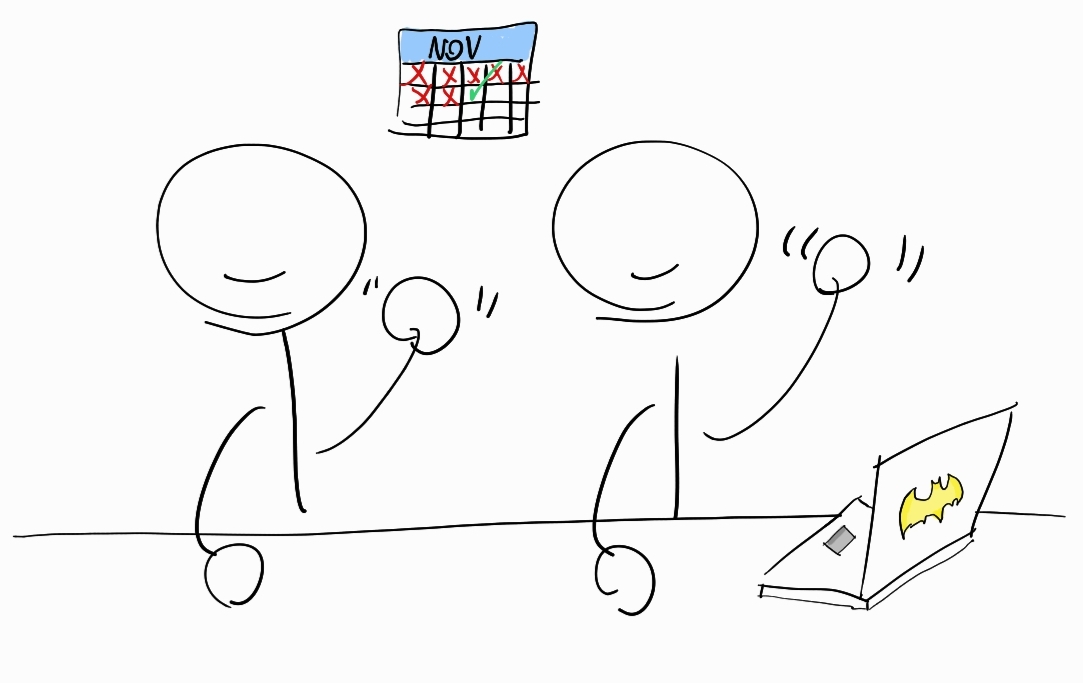
Second post after a long time. If I said I didn’t think I’d write for this project again, I’d be lying. That’s what it’s about, right? When you start an adventure, while you don’t know what awaits you along the way, you develop your plan focused on where you want to go. If I’m being too poetic again, what I’m trying to make clear is that at Proyecto Arquimedes we have a plan, certain milestones (experiments), and we hope they’ll take us where we want to be.
This publication wasn’t in the plans —or, seen another way, this experiment wasn’t in the plans— and in this I am truly not lying. But a plan gets conceived on paper and transforms into execution. This post is born from the foundations of the first one and from interaction with our environment.
From interacting with our environment because while many have expressed enthusiasm reading “A New Kind of Bicycle for the Mind”, many have also asked us: what is your project about? Or what are you going to do in your project? That is, we’ve received inputs that affect our plan.
And from the foundations of the first post, because if we review the claims it contains, we’ll see how they translate into results.
Let’s bring back those claims and try to clear up doubts.
Claim #1
“…learn by doing, build without being experts, and push ideas that once felt beyond our reach”
In the following sections, you’ll find our second experiment1 — an experiment we developed ourselves, without being full-stack development experts (complete development of a web application).
Claim #2
“…use AI as a lever”
An experiment that allowed us to use AI’s full potential, with code assistance and learning tutoring, to navigate an unfamiliar environment.
Claim #3
“…standing on the shoulders of those who inspire us”

An experiment that was the channel for turning our readings into a visible result.
Let’s make a parenthesis here: while AI helped us reach the result, it would’ve been impossible without the base concepts we learned from the giants. Concepts about:
- Data analysis with Python (Wes McKinney, Python for Data Analysis, 2022)
- Practical statistics for data science (Peter & Andrew Bruce, Peter Gedeck, Practical Statistics for Data Scientists, 2020)
- Machine learning systems design (Chip Huyen, Designing Machine Learning Systems, 2022)
- Modern web development with Python (Bill Lubanovic, FastAPI: Modern Python Web Development, 2023)
- Web applications in pure Python (Jeremy Howard & Answer.AI Lab, FastHTML, 2024)
- Web scraping and data extraction (Ryan Mitchell, Web Scraping with Python, 2024)
- Geospatial data science (David S. Jordan, Applied Geospatial Data Science with Python, 2022)
- ETL pipelines with Python (Brij Kishore Pandey & Emily Ro Schoof, Building ETL Pipelines with Python, 2023)
- Version control with Git (Anna Skoulikari, Learning Git, 2023)
- PostgreSQL databases (The PostgreSQL Global Development Group, PostgreSQL 16.9 Documentation, 2025)
- Application packaging with dependencies and versions, ensuring reproducibility (Nigel Poulton, Getting Started with Docker and AI, 2025)
And we’re sure we’re forgetting many other subjects that played an important role in this full-stack development.
Claim #4
“…experiment with the problems we face in our own daily lives”
As we said, this experiment wasn’t in the backlog. Proof of this is its name — for more context, we like to give good names to our experiments and this one doesn’t convince us, but it was born from a problem that came up in our daily life, the idea of clarifying something as simple as the doubt of which is left and which is right.
Claim #5
“And if we make mistakes —which we will— we hope the community helps us get it right and grow”
It was revealing to hear questions about the need to understand what we’re going to do at Proyecto Arquimedes. Maybe we communicated poorly or used a narrative that didn’t transparently define our objectives. This allowed us to ask ourselves: what did we say we were going to do? And then, are we doing it? The answer gave us great satisfaction and motivation to continue with this project. We hope in these lines you also find our claims reproduced in results.
What I cannot create, I do not understand
This brief section will act as both a disclaimer and reaffirmation. While we said:
“…to be honest, we know that building something meaningful with these technologies involves far more than just understanding the models… Still, we believe that a systematic process… can move us forward, one step at a time”
And also in the previous section we mentioned we used machine learning systems design practices, our experiment doesn’t yet implement machine learning models or foundational language models (LLMs). However, with the experiment we’re also embodying the idea that the title here recites and that was developed in the “Give me a place to stand, and I shall move the world” section of the first post. That is, we create something to understand it.
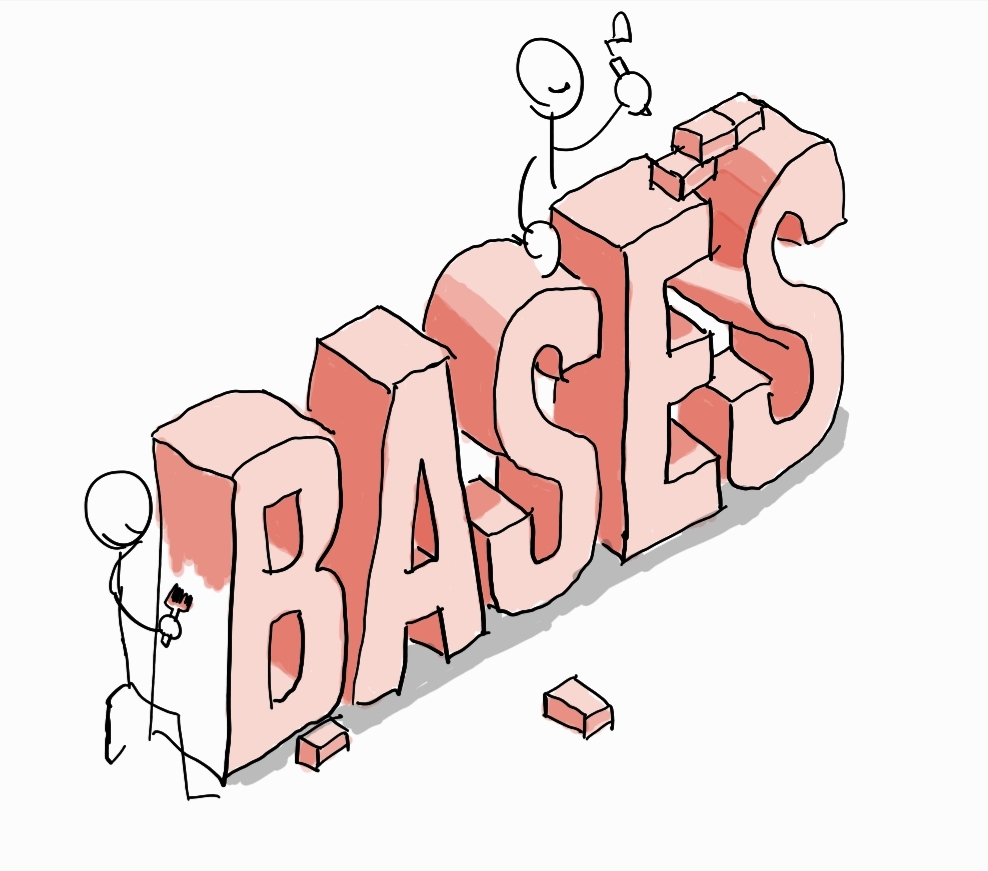
We believe this experiment and this philosophy are important to keep advancing because we can’t create an application that implements such innovative technologies as these (ML / AI) if we don’t understand the foundations they should be built on (software development and machine learning systems).
PlusvaWhat!?
After approximately 1,400 words, let’s talk about the experiment!
But first let me ask you: What do you know about Real Estate Development? Yeah, a bit more context is necessary to understand how this experiment was born.
Real estate development is the process of developing and making projects tangible — like houses, residential buildings, multi-use buildings, industrial buildings, land subdivisions, gated communities, hotels, commercial buildings and many others. And to achieve this it brings together subjects like legal, public and urban development, architecture, engineering, commercial, marketing and advertising, financial and yes, many others. And it’s important to know because the members of this project have spent the last year developing their stable working life in this market.
Like any person in a new world, we were bombarded with new terms, like when you see those reels about marketing topics and they throw weird words at you (typically acronyms in English).

Among those words was “capital gain” (in Spanish: plusvalía), and while we already had a notion of what this meant when we entered the industry, it wasn’t and isn’t something tangible for us. I mean, an increase in property value is promised, something in the future where we have no control? Additionally, it’s one of the words most linked to this sector. If you search Google in Paraguay for [“investment” “paraguay” “real estate”]2, you find 328 results, and if you add the word “capital gain” (plusvalía), that is [“investment” “paraguay” “real estate” “plusvalia”], you find 308 results. We could say that only 20 more results exist without the word “capital gain” — that word appears in 93% of the results3 about real estate investment in Paraguay and is always present in our daily life, generating discomfort, like when your copilot tells you “now turn left” and you wonder: which was left?
Given this situation and as curious people eager to untie that knot, we asked ourselves: how can we make it tangible? That’s when the famous phrase from our adult relatives came to mind: “This used to be all fields here” and the famous myth that they could buy a property with just a small amount of money back then. That clicked. We can verify the reality of capital gain with information obtained at family dinners. We can take the value at which our grandparents or parents bought our house and verify how much this value grew.

That’s how PlusvaQue!? was born. A capital gain calculator so anyone can make this concept tangible. The application tries to be as simple as possible — with three inputs from the user, it generates in two steps indicators to understand how their property changes value over time.

While we want to explain all the assumptions we made to generate the results, you’re probably tired of reading already, so the documentation detailing what’s necessary to understand the process will be available in a public repository.
What’s interesting to understand now in a simplified way is that the first thing you’ll find is an explanation through brief comments and scribbles that the money your grandma says she spent on her house doesn’t have the same purchasing power in today’s world, so the first calculation performed converts that value to an equivalent present value.
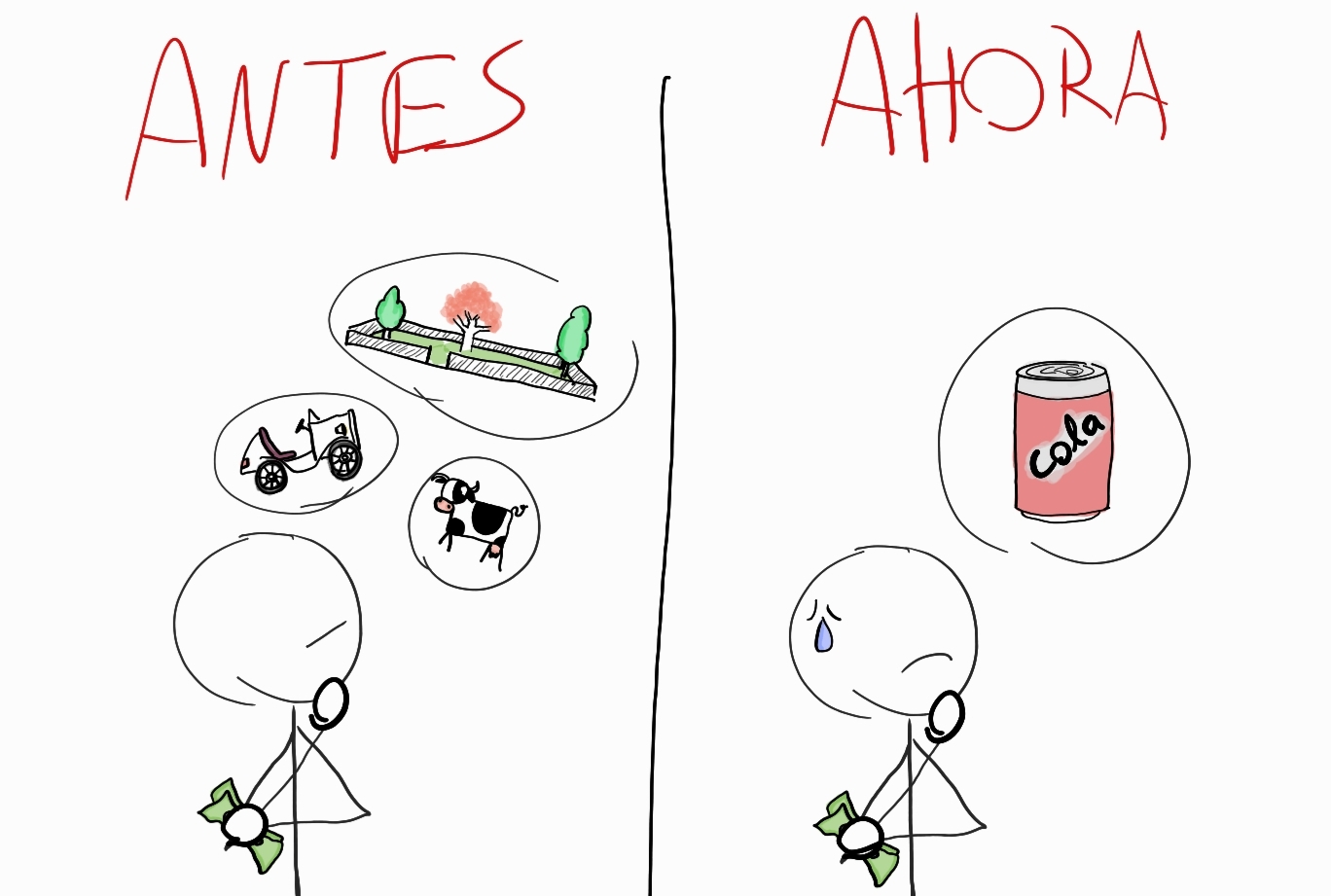
On the other hand, you’ll have the option to enter values in both Paraguayan guaraníes and US dollars, but the results will be handled purely in dollars, simply to take advantage of the ease in the number of digits of this currency.
You’ll be tempted to think that this new value already defines capital gain (you’ll realize it’s a higher value), however, the concept of change in money value over time only plays one of the roles. The next concept is the omnipresent and omnipotent “market”. For example, how much properties are in demand in your area, the availability of properties for sale, the growing population looking for a home and many other factors within this all-encompassing concept.
And to account for the powerful market, you’ll have the option to select your grandma’s house location on a map, then confirm it with a button which will return various metrics — one of them being the average value of properties for sale in that neighborhood, if it’s within the city of Asunción, or average value of the city if it’s another location outside Asunción (Asunción is the mother of cities and deserves special treatment). What we liked most was returning the heat map where you can see which zones have more concentrated sales.
To translate capital gain into a result, we consider that this average value is the possible sale value of your grandma’s house. And the indicator that best represents capital gain is the growth percentage, which is calculated as follows: if they bought it for a certain amount in 1902 and that value has a purchasing power in the present of approximately guaraníes 420 million (remember that money from before was more powerful than now due to inflation), then this is the value of your “investment”. Then according to the market, your area is selling houses at an average of guaraníes 1,050 millions. So the growth of your property value is calculated by dividing what you gained against what you paid, but again, the present value of what you paid to be fair. In the example’s case, you hypothetically sold it for guaraníes 1,050 millions, but paid guaraníes 420 million, so your gain is guaraníes 630 million. By dividing this value by what you paid, you’ll know how many times more than that value you’re earning.
\[ \frac{\text{Gs. } 1.050.000.000 - \text{Gs. } 420.000.000}{\text{Gs. } 420.000.000} = \frac{\text{Gs. } 630.000.000}{\text{Gs. } 420.000.000} = 1.5 \]
Or in other words: you gained 1.5 times what you invested, meaning your gain represents 150% of your initial investment.
That was just an example I just made up, but in that example we can see one of the big assumptions — we must keep in mind that this isn’t accurate at all. If your grandma’s house is 4 meters long by 4 meters wide, it can’t be worth the same as a house 30 meters long by 12 meters wide, or if only the undeveloped land was purchased and our available data mixes the categories of land and houses available in your area, it cannot be treated in the same way. So this result is simply (the average value of your area) an approximation and for educational purposes an appropriate one4.
Additionally, did you know that generative text AI gives you an approximate value of the next most probable word to the text you pass it? That’s why in the user interface (on the web page where you chat with ChatGPT) below in small letters it always warns you that you should check reliable sources. Basically that’s the warning we’re making in the previous paragraph — let’s understand that this experiment is for educational purposes.
We invite you to ask your grandma or your parents for the purchase value of your house and give value to the capital gain it generated in our calculator! (the web address is at the end of the post)
We didn’t move fast, we broke our finances
This is another claim from the first post that became real. Almost 4 months later comes this second publication. In between was the development of a thesis, lots of research from the bibliographies cited above and iterations on other experiments.
Adding curiosities that align with this title: we committed to doing this experiment in one week — it ended up being 3 weeks because, as we already mentioned, we have stable jobs from 7 AM to 6 PM leaving us only 3 available hours each weekday to work on experiments. This is so we don’t neglect our health — we always take a walk to clear our minds and try to sleep at least 7 hours (never happens, iterations of our experiments always interrupt our rest).
Now, if we want to be more precise about times, we can analyze the Git repository to calculate the actual hours dedicated to code. Each commit5 has a timestamp that allows us to reconstruct exactly when we worked.
These are some representative commits that show work intensity:
# First project commit
2025-10-23 19:30:57 - Create repository
2025-10-23 22:48:09 - Initial project configuration

# Most productive day (Oct 26): 11.03 hours
2025-10-26 11:58:20 - Simplify results presentation
2025-10-26 23:00:22 - Improve geographic query system

# Second most productive day (Nov 2): 10.57 hours
2025-11-02 11:40:41 - Add data endpoint for heat map
2025-11-02 13:38:16 - Create interactive map component
2025-11-02 22:14:39 - Performance optimization (11.2x faster)

# Third most productive day (Nov 15): 9.57 hours
2025-11-15 10:32:27 - Translate main page to Spanish/English
2025-11-15 12:08:04 - Update inflation section design
2025-11-15 15:34:11 - Improve main user interface
2025-11-15 20:06:22 - Complete internationalization system
Total: 70 commits in 24 calendar days = 47.7 hours of effective development
The numbers are revealing: analyzing the time between the first and last commit of each development day, we discovered we dedicated 47.7 hours to the project distributed over 24 calendar days. Remember we only had 3 available hours on weekdays due to our stable jobs, leaving weekends with greater availability.
Now comes the interesting part: if we take those 47.7 hours and divide them by 6 daily hours (a realistic full-time workday), the project would’ve taken us barely 8 days.
And obviously we’re breaking our finances. If we calculate the profitability of Proyecto Arquimedes, drum roll… it’s –100% (negative one hundred). But our team has 100% faith that in risk lies gain — just kidding, that was the quote you expected. We really have faith that our execution will bring us gain. If we keep this momentum, we feel we’ll get where we want to be.
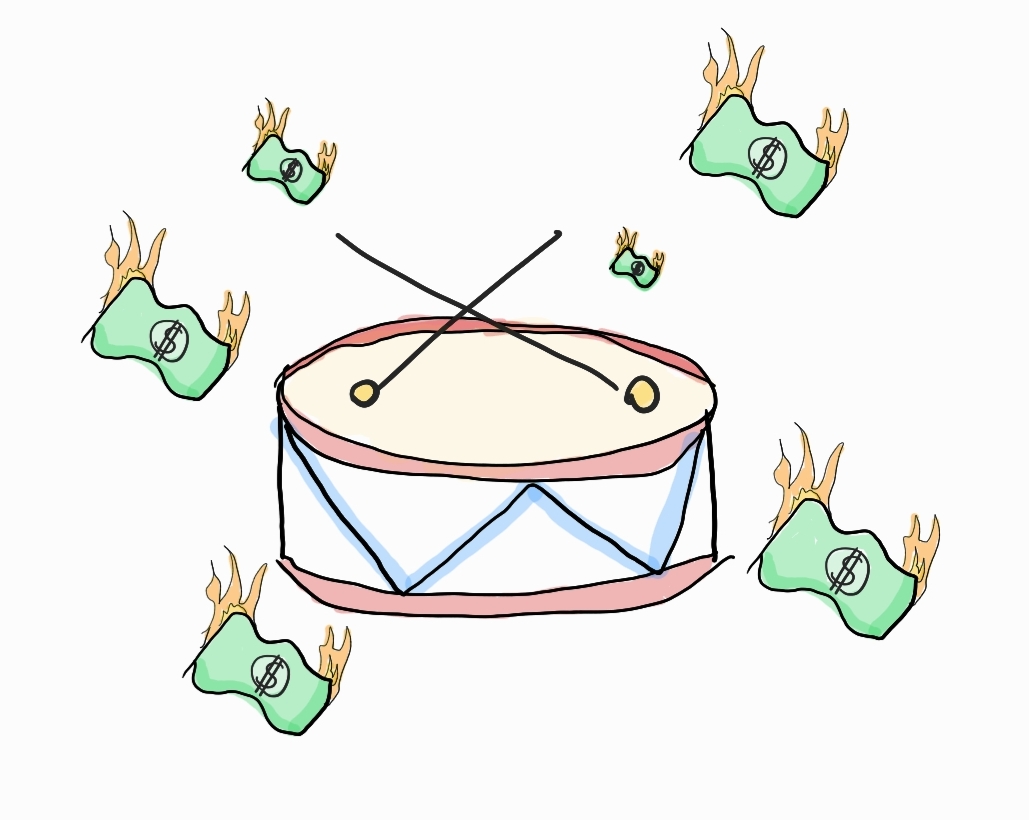
Is it normal to write a postscript in a blog section? Well here it goes.
PS: We forgot to cancel a subscription to an online learning platform, they charged us for the year in advance, haha we’re not that methodical either.
US$ 800K
Well, now we just need to apply the machine learning model that predicts the results, right? Wink, wink.
For now, we leave you the link to try our experiment (press the logo below, it redirect to the page):

Feedback? Bugs? Comments are open below.
Footnotes
To clarify: Proyecto Arquimedes itself is our first experiment. The idea of starting a collective that drives experiments with AI and ML is itself an experiment. What we present here is the first technical project we developed within that broader experimental framework.↩︎
Google search syntax: Quotation marks (““) force Google to search for the exact word as it appears. Brackets [] only indicate that all those words are searched together and aren’t part of the actual search you should enter in Google.↩︎
Searches performed on Google.com.py in incognito mode on November 15, 2025. Numbers may vary according to personalization and search date. The important point isn’t the exact figure, but the omnipresence of the term “capital gain” (plusvalía) in Paraguayan real estate discourse.↩︎
Our model calculates the inflation-adjusted value using the historical exchange rate between guaraníes and dollars, not the CPI. The returned market value is the average value of all properties available in the same city or neighborhood as the user, without considering sizes, characteristics or number of floors. That’s why we insist: it’s an educational approximation, not a precise valuation.↩︎
A “commit” is like a save point in software development, where we record the changes made. By analyzing timestamps between commits we can estimate how much real time we dedicated to the project.↩︎